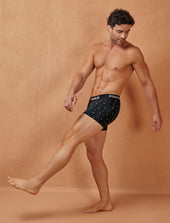



Loincloth Man: From Ancient Garments to Modern Fashion Icon

Introduction
The loincloth is arguably one of the most ancient and enduring garments in human history. Its simplistic design and utilitarian purpose have allowed it to transcend time, cultures, and societal shifts, transforming from a functional piece of clothing into a potent symbol of identity, tradition, rebellion, and fashion. The journey of the loincloth — often associated with primitive societies — reveals fascinating insights into human ingenuity, cultural expression, and social evolution. And its influence lives on today in the very underwear and swimwear we wear.
The Origins of the Loincloth
The earliest known evidence of the loincloth can be traced back to prehistoric times when early humans needed simple, effective coverings that offered protection and mobility. In the absence of complex textile technology, our ancestors crafted loincloths from readily available natural materials such as animal hides, plant leaves, vines, and animal sinew. Analysis of archaeological sites and cave paintings have provided clues about how widespread and vital this garment was to early humans across the globe — from Africa to Asia, Australia, and the Americas. Its basic form — a strip of material wrapped around the waist — made it adaptable to different environments, ensuring that every early community could create their own version.
The Role of the Loincloth in Ancient Cultures
As civilizations developed, the loincloth evolved in complexity, material, and symbolic meaning. Its significance varied greatly depending on societal norms, climate, and spiritual beliefs:
- Ancient Egypt: Loincloths called shendyt became refined, often decorated with intricate embroidery, signifying status and authority among royalty and priests.
- Africa: Among many tribes — including the Maasai and Zulu — the loincloth was a vital part of ceremonial dress, richly decorated with beads, cowrie shells, and vibrant dyes reflecting social hierarchy and rites of passage.
- Native American Tribes: For Plains and Southwest tribes, the loincloth was essential daily attire, supplemented with beadwork, feathers, and symbolic adornments representing spiritual beliefs and social status.
- Ancient Greece and Rome: The subligaculum and perizoma served both functional and athletic purposes, especially among Olympic athletes, symbolizing strength, modesty, and martial readiness.
- South and Southeast Asia: The Indian langot and Japanese fundoshi combined practicality with ritual significance, crafted from silk or cotton and decorated with sacred symbols.
- Pacific Islands: The tapa cloth, made from bark or pith, was fashioned into ceremonial loin coverings signifying social hierarchy and cultural identity among Polynesian and Melanesian communities.
- Mesopotamia and the Middle East: Early civilizations used simple cloth wraps — some intricately decorated — for both daily wear and ceremonial purposes.
The Medieval and Renaissance Periods
During the Middle Ages, the fundamental design of the loincloth transitioned into more layered and complex clothing systems. The basic waistband persisted among peasants and laborers, especially in regions where climate and resources limited textile production. The Renaissance brought renewed interest in clothing aesthetics, leading to corsets, doublets, and trousers — yet the underlying concept of minimal coverage and freedom of movement was preserved in many indigenous and rural communities, where the loincloth maintained ceremonial and ritual significance.
The 19th and 20th Century: Decline and Rebirth
The industrial revolution and globalization profoundly altered the way clothing was produced, consumed, and understood. The Western world adopted tailored garments, and the loincloth gradually fell out of everyday practical use. However, it persisted in specific contexts:
- Indigenous Reassertion: Native populations worldwide continued to wear loincloths as a mark of cultural pride, spiritual heritage, and resistance against cultural assimilation.
- Rebellion and Counterculture: During the 20th century, the loincloth was adopted by subcultures such as hippies and naturists as symbols of freedom, naturalism, and rejection of material excess.
- Fashion and Avant-Garde: High fashion designers in the late 20th and early 21st centuries reclaimed the loincloth as a provocative statement, expanding its use into runway shows and artistic performances that challenged conventional modesty and style norms.
From Loincloth to Modern Underwear: The Design Legacy
The influence of the loincloth on modern fashion is more direct than most people realize. The minimalist nature and form-fitting logic of the loincloth directly inspired contemporary underwear and swimwear design. Modern briefs, trunks, and bikinis mirror the simplicity and body-conscious silhouette of the ancient garment — emphasizing comfort, aesthetics, and freedom of movement. Designers increasingly incorporate traditional patterns, fabrics, and techniques into couture to honor cultural roots, while the bold, stripped-back silhouette of the loincloth continues to appeal to experimental fashion movements. Explore this lineage in our men's briefs and bikinis collection or the full men's underwear range — modern interpretations of one of history's oldest garments.
The Cultural Significance of the Loincloth Today
Today, the loincloth embodies complex layers of symbolism. It represents connection to ancestors and traditional lifestyles, resilience against cultural homogenization, and a statement of identity. In Africa, South Asia, and indigenous communities of the Americas, wearing the loincloth remains a proud cultural statement, often worn during festivals, rituals, and important ceremonies. In modern fashion and popular culture, it has been reimagined as a bold, avant-garde statement piece — appearing in contemporary art, music videos, fashion editorials, and performance art as a symbol of primal energy, liberation, and authenticity.
Cultural Preservation and Global Appreciation
Despite modernization, many indigenous communities remain committed to the craftsmanship of traditional loincloths. Fashion collaborations between native artisans and global designers promote cultural exchange and economic support. Documentaries, exhibitions, and festivals highlight the importance of preserving traditional techniques, while educational initiatives teach younger generations the art of crafting these garments — ensuring their survival and relevance in a globalized world.
The Future of the Loincloth
The continued relevance of the loincloth hinges on its ability to adapt and symbolize more than just primitive attire. As debates around sustainability and natural materials grow, the loincloth may see a resurgence as an eco-friendly alternative to fast fashion, emphasizing simplicity, durability, and connection to nature. It represents an ongoing dialogue about human roots, cultural pride, and self-expression.
Conclusion
The evolution of the loincloth from an essential primitive garment to a potent cultural icon underscores humanity's timeless relationship with clothing — one that balances function, identity, spirituality, and rebellion. This simple strip of fabric, with its rich history woven into diverse cultures across eras, continues to inspire, challenge, and define notions of authenticity and human resilience. And its spirit lives on in every pair of modern briefs, trunks, and swimwear that prioritizes the body, movement, and self-expression above all else. Discover that spirit in our men's underwear collection at EricSaloDesign.com — or explore our guide to bold men's underwear and confidence for a modern take on this ancient tradition.
Fashion On Sale


LaBlinque Tarzan Tie Side Loincloth Underwear Camel LB-15235 Size S
- $20.00 CAD
$40.00 CAD- $20.00 CAD
- Unit price
- per
- As shown


Pikante PIK 1289 Itadaki Briefs Color Black
- $42.00 CAD
$67.00 CAD- $42.00 CAD
- Unit price
- per


CandyMan 99586 Chain G-String Color Red
- $37.00 CAD
$44.00 CAD- $37.00 CAD
- Unit price
- per


JUSTIN+SIMON XSJ01 Classic Bikini Color Metal Green
- $31.00 CAD
$37.00 CAD- $31.00 CAD
- Unit price
- per


CandyMan 99848 Bikini Thongs Color Black
- $32.00 CAD
$38.00 CAD- $32.00 CAD
- Unit price
- per
JUSTIN+SIMON XSJ03 Classic Thongs Color USA Flag
- $35.00 CAD
$43.00 CAD- $35.00 CAD
- Unit price
- per


ErgoWear EW1790 MAX FLOW Bikini Color Dark Blue
- $43.00 CAD
$52.00 CAD- $43.00 CAD
- Unit price
- per


ErgoWear EW1829 FEEL SW Swim Trunks Color Aqua-Leaves
- $80.00 CAD
$95.00 CAD- $80.00 CAD
- Unit price
- per